Agriculture
- Faculty Home
- AGRI
- Profile Details

Dr. Mehede Hassan Rubel is an Associate Professor in the Department of Agriculture at Noakhali Science and Technology University (NSTU). His research focuses on plant molecular biology, plant growth-promoting bacteria (PGPB), bioinformatics, and host-pathogen interactions. He has led several government-funded projects and published over 35 research articles in reputed journals. Dr. Rubel earned his PhD on molecular marker development and gene expression profiling in cabbage and is currently working on breeding stress-tolerant crops for the southern region of Bangladesh.
Dr. Mehede Hassan Rubel has been working as an Associate Professor at the Department of Agriculture at Noakhali Science and Technology University (NSTU) since 26 September 2020; joined as a Lecturer at the department on 26th May 2013. His research background includes a strong foundation in the biological sciences through hunting of different project activities, focusing on characterization of different plants, molecular biology, plant growth-promoting bacteria (PGPB), bioinformatics, and host-pathogen interactions. He has been participated in several national and international seminars, workshops, conference related to climate resilient crops and received “Best Poster Awards”. He achieved National Science, Information and Communication Technology (NSICT) Fellowship during his Master of Science study. He completed several projects as a Project Investigator like Special Allocation funded by the Ministry of Science and Technology (MoST), GoB and UGC research fund by NSTU Research Cell, NSTU. He successfully completed several training courses e.g., Statistical Package for Postgraduates in Agriculture, Project Cycle Management on Sustainable Climate Smart Agriculture for Govt. Officials, Foundation training for University Teachers etc. He achieved his PhD on “Development of molecular markers for pathovars and races of Xanthomonas campestris and profiling glucosinolate biosynthetic gene expressions modulated by black rot in cabbage”. Now, he is working on breeding for developing biotic and abiotic stress tolerant crops especially southern part of Bangladesh and molecular characterization of pathogens causing diseases on major crops in Bangladesh, and published thirty-six (36) articles in renowned journals with high impact factors.
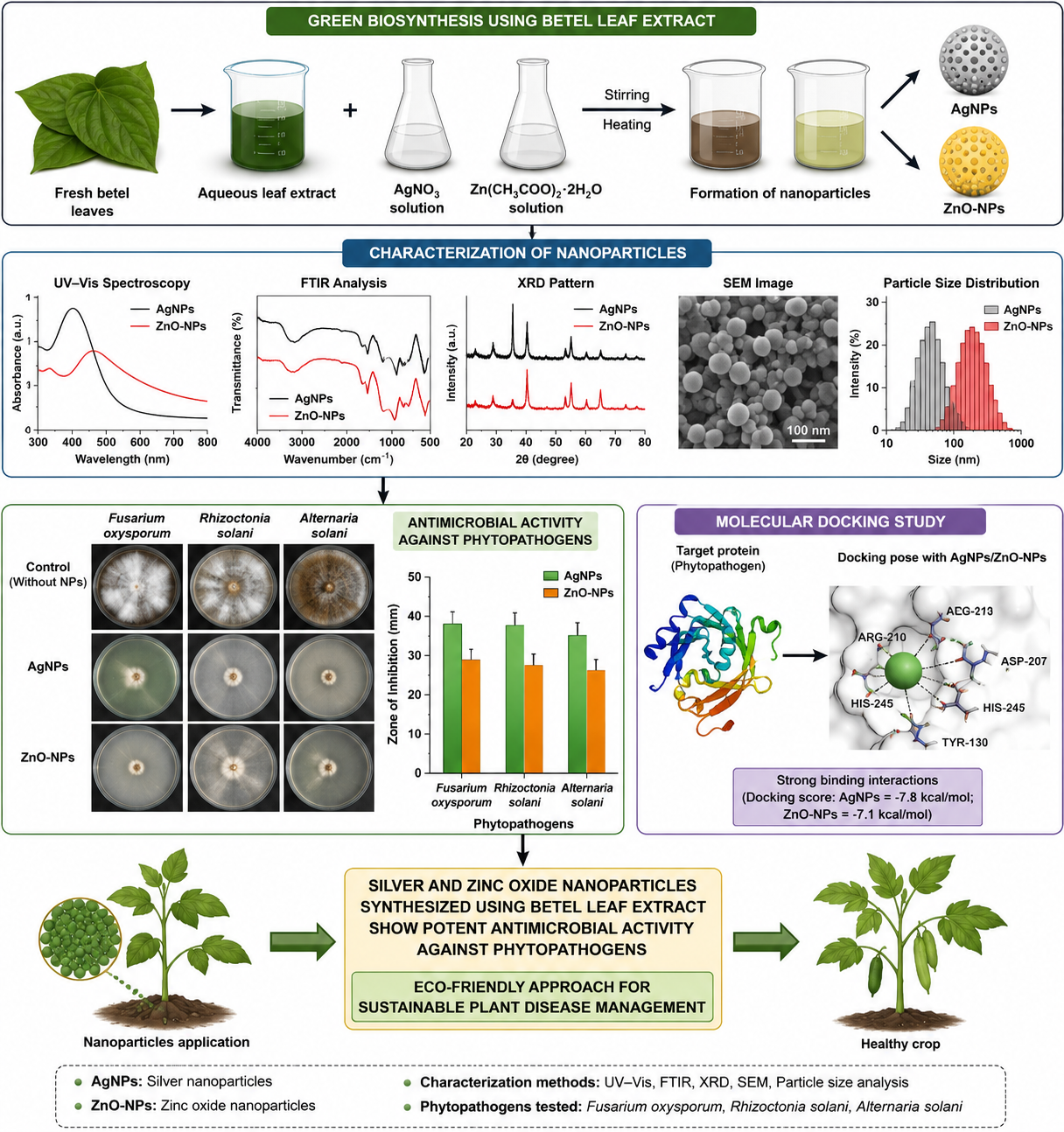
Abstract: This study developed silver (AgNPs) and zinc oxide (ZnO-NPs) nanoparticles through green synthesis using betel leaf extract and characterized their physicochemical properties. The nanoparticles exhibited strong antimicrobial activity against important phytopathogens, while molecular docking analysis suggested potential interactions with key pathogen proteins, explaining their inhibitory effects. The findings demonstrate that plant-based nanoparticles are a promising, eco-friendly alternative for sustainable plant disease management.
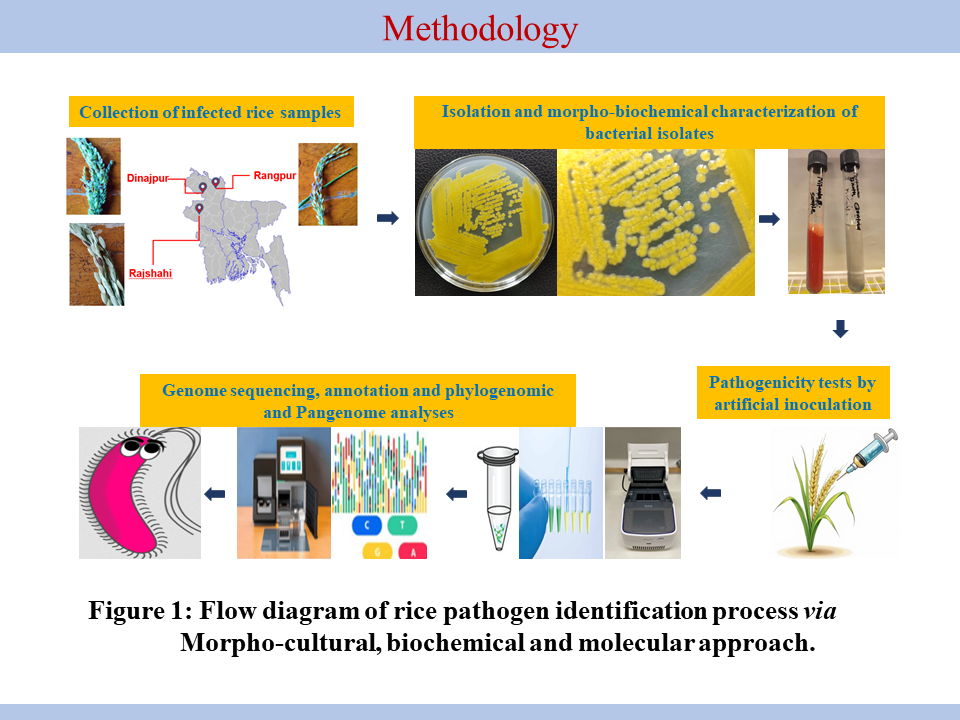
Abstract: The bacterial pathogen was identified at the species level using whole-genome sequencing (WGS) integrated with average nucleotide identity (ANI), digital DNA–DNA hybridization (dDDH), and core-genome phylogenetic analyses for accurate taxonomic classification, and the resulting manuscript has been submitted to a peer-reviewed scientific journal, where it is currently under review.
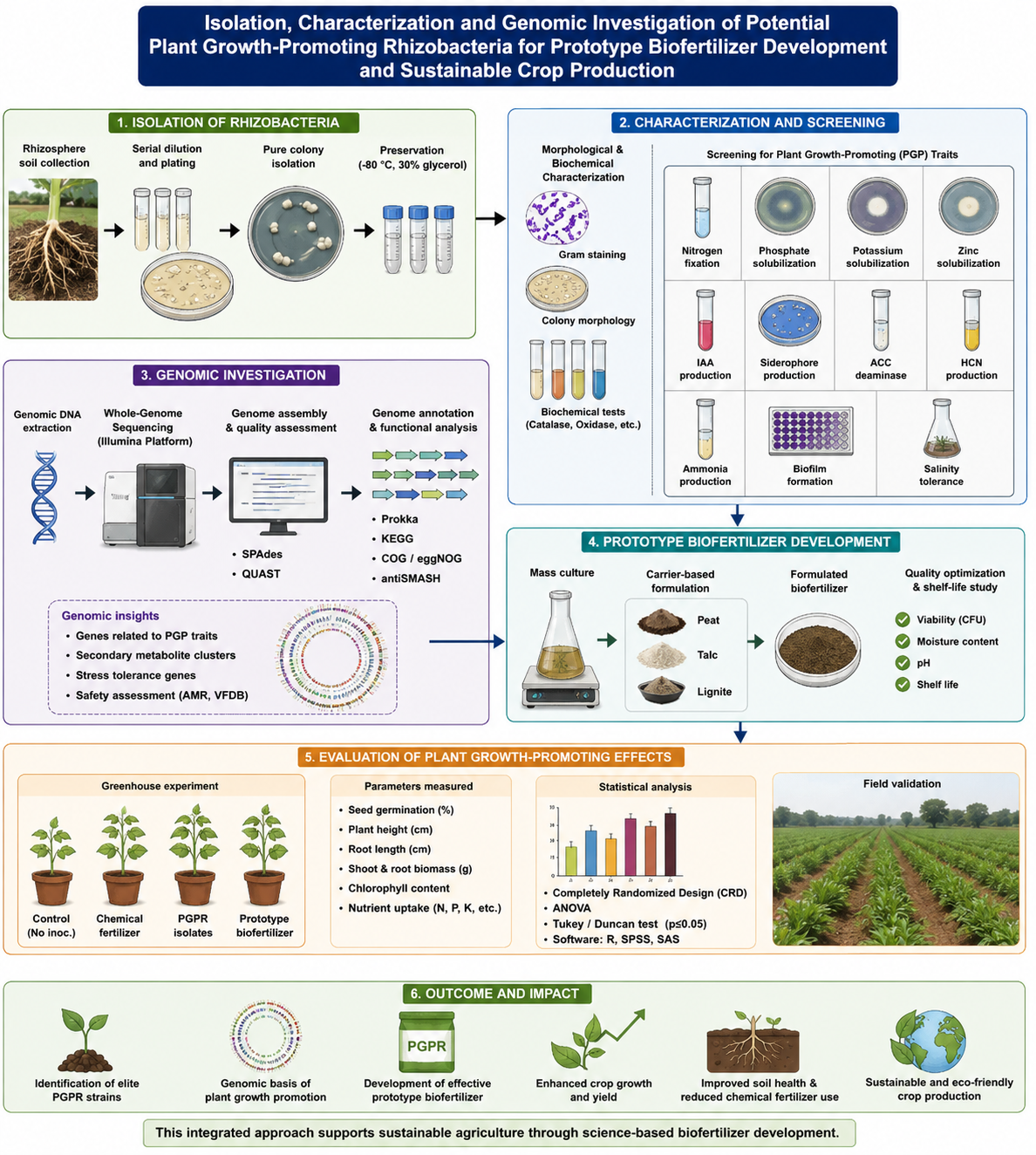
Abstract: otential plant growth-promoting rhizobacteria (PGPR) were isolated, characterized, and genomically investigated to identify beneficial traits for biofertilizer development. Promising isolates were evaluated for plant growth-promoting activities and developed into prototype biofertilizers to enhance sustainable crop production while reducing dependence on chemical fertilizers.
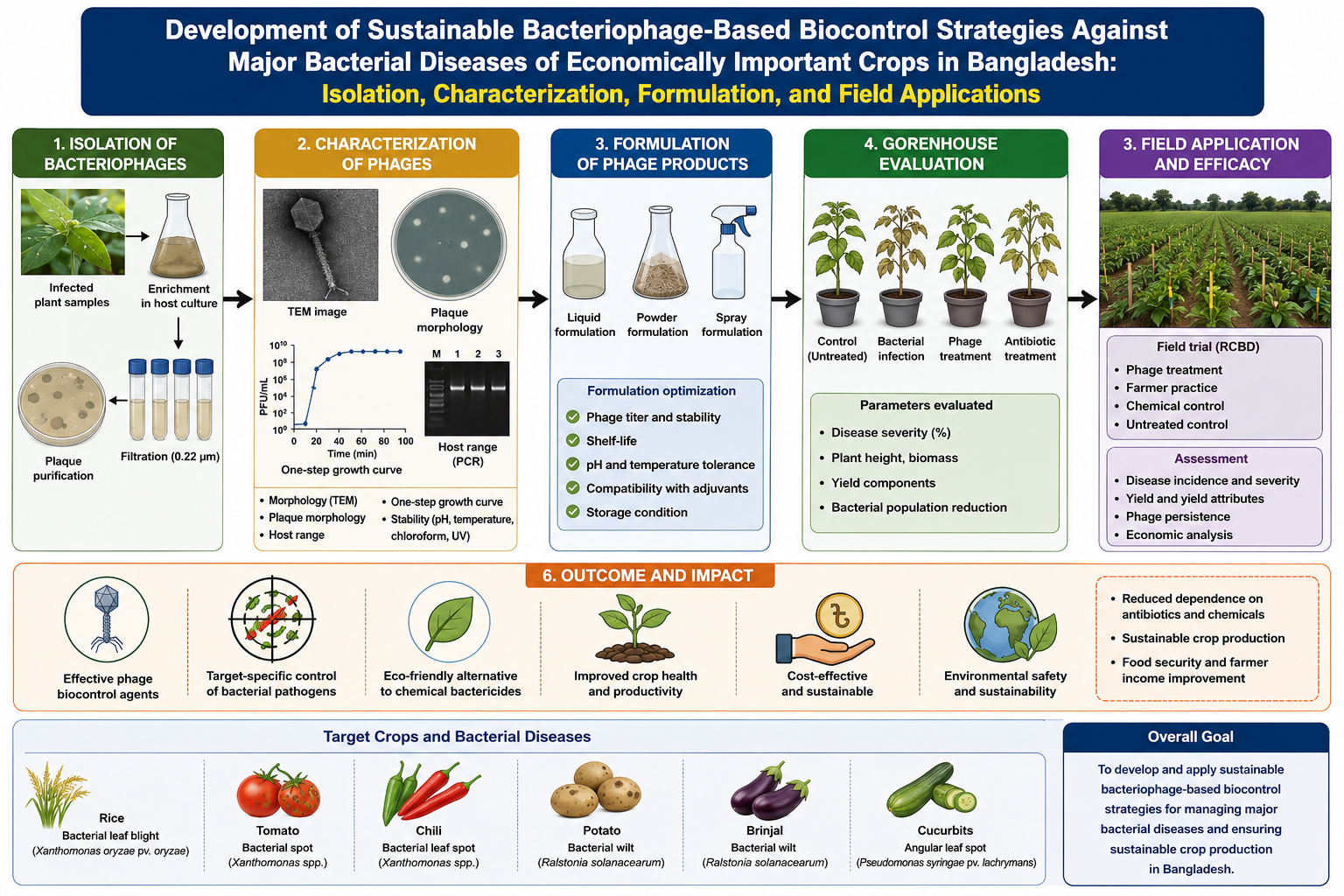
Abstract: This study aims to develop sustainable bacteriophage-based biocontrol strategies for managing major bacterial diseases of economically important crops in Bangladesh. Bacteriophages will be isolated, characterized, and formulated into effective biocontrol products, followed by greenhouse and field evaluations to provide an eco-friendly alternative to chemical bactericides and improve sustainable crop production.
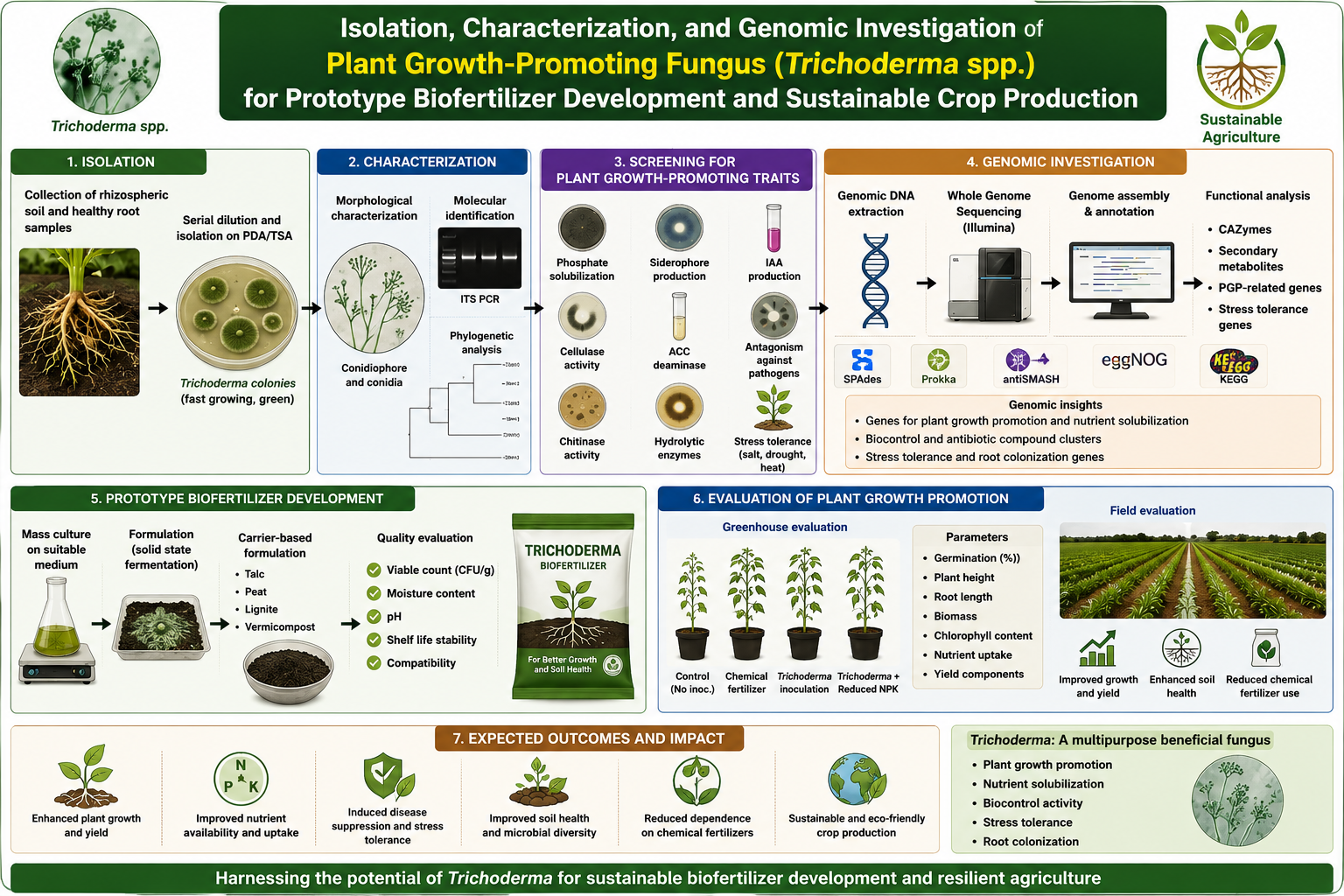
Abstract: Potential plant growth-promoting fungi (PGPF) were isolated, characterized, and genomically investigated to identify beneficial traits associated with plant growth promotion and stress tolerance. Promising fungal isolates were developed into prototype biofertilizers and evaluated for their ability to improve crop growth, yield, and soil health, providing a sustainable alternative to chemical fertilizers.
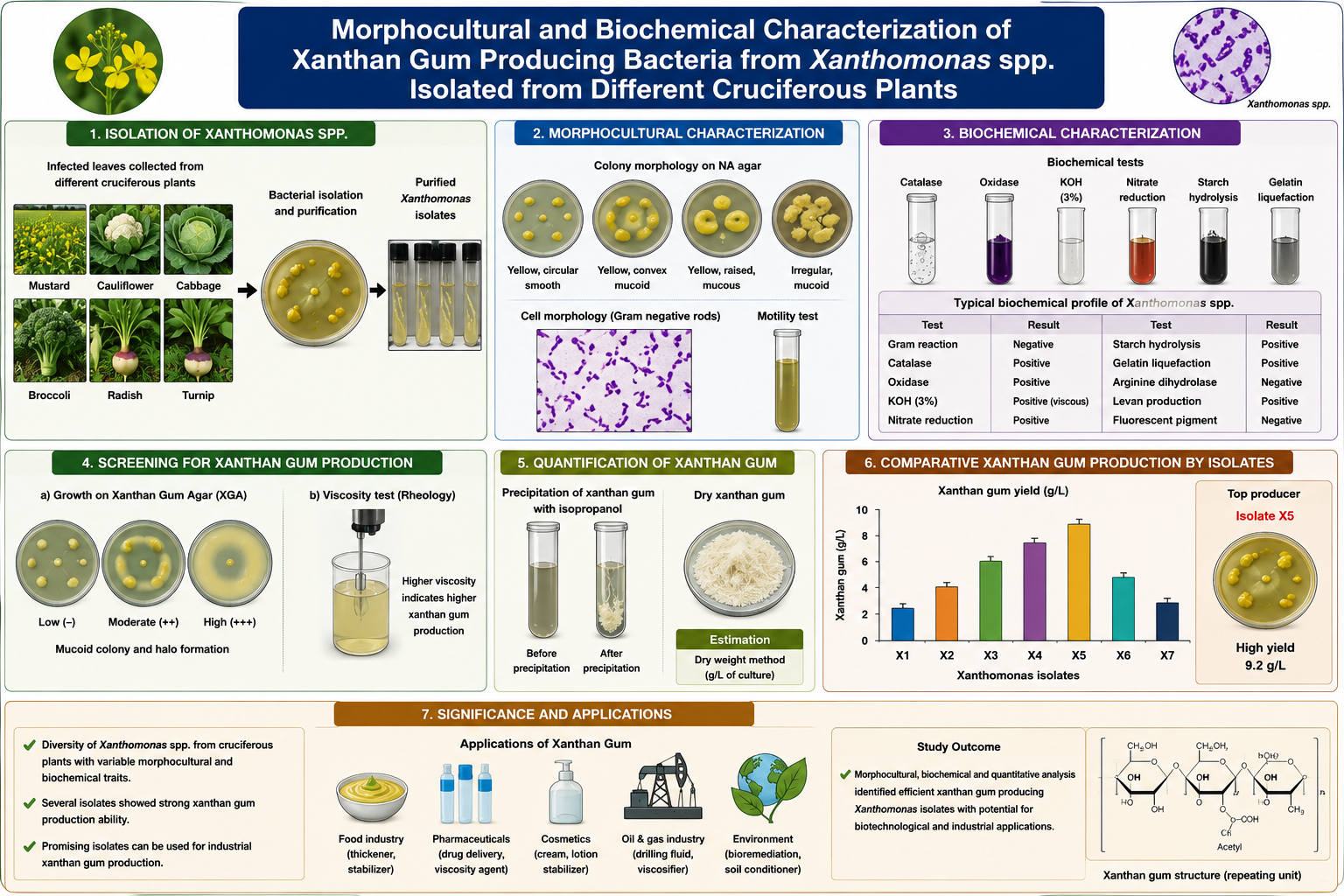
Abstract: Xanthomonas spp. were isolated from different cruciferous plants and characterized based on their morphological, cultural, and biochemical properties. The isolates were evaluated for xanthan gum production, revealing variability in growth characteristics and gum-producing ability. The study identified promising Xanthomonas isolates with high xanthan gum production potential for industrial and biotechnological applications.
Abstract: This study aims to develop genome-based molecular markers for the rapid and accurate detection of Xanthomonas oryzae pv. oryzae and Pantoea ananatis, the major bacterial pathogens associated with bacterial leaf blight (BLB) of rice. Comparative whole-genome analysis will be used to identify species-specific genetic markers, which will be validated for sensitive, reliable, and early diagnosis to support effective disease surveillance and management.

Abstract: This project aims to promote climate-resilient, saline-tolerant tomato cultivation in the coastal saline-prone areas of Bangladesh to enhance crop productivity, improve farmers' livelihoods, and strengthen food and nutritional security. It also seeks to develop and evaluate natural food colorant formulations from dried tomato and sweet red chili powders by analyzing their pigment composition, sensory quality, shelf-life stability, and consumer acceptability. The project will identify the most suitable formulation for culinary applications while supporting sustainable agriculture and value-added tomato processing.
Abstract: This project aims to identify the clubroot pathogen and screen Bangladeshi rapeseed-mustard varieties for resistance, develop sustainable disease management strategies using eco-friendly approaches, and investigate plant defense mechanisms through transcriptomic and metagenomic analyses. The findings will support the development of disease-resistant varieties, improve sustainable crop production, and enhance food and nutritional security in Bangladesh.
Abstract: This study isolated and identified indigenous Trichoderma asperellum from mustard roots in Bangladesh using morphological and ITS-based molecular analyses. Greenhouse evaluation showed that T. asperellum combined with liquid NPK fertilizer significantly enhanced seedling growth, biomass, leaf area, and chlorophyll content compared with NPK alone. The findings demonstrate the potential of native T. asperellum as an eco-friendly biofertilizer for sustainable mustard production in Bangladesh.
Abstract: This project aims to perform whole-genome sequencing and comparative genomics of seasonal Xanthomonas oryzae pv. oryzae (Xoo) isolates to reveal their genetic diversity, virulence factors, and mobilome dynamics in Bangladesh. It will also use AI/ML-based in silico drug design to identify lead compounds targeting conserved virulence proteins, supporting the development of sustainable strategies for bacterial leaf blight management.
Abstract: This study evaluated the effects of the seaweed biostimulant Ascophyllum nodosum on the growth, biochemical traits, and yield of three cherry tomato varieties under RCBD. Biostimulant application significantly improved plant growth, fruit quality, and yield compared with the control. Overall, the 2% biostimulant treatment (T3) was most effective for enhancing morphological and biochemical traits, while the 1.5% treatment (T2) produced the highest yield, demonstrating the potential of seaweed biostimulants for sustainable cherry tomato production.
Abstract:
Abstract: This project collected and identified Xanthomonas campestris pv. campestris from black rot-infected cabbage, evaluated eco-friendly management options including nanoparticles, melatonin, and seaweeds, and identified disease-resistant cabbage varieties for sustainable disease management and improved cabbage production in Bangladesh.
Abstract: This study identified the root rot pathogen of melon through morphological, pathological, and molecular analyses, determined the optimum conditions for mycelial growth and sclerotia formation of Lasiodiplodia theobromae, and evaluated the host range of the pathogen isolates.
Abstract: his study isolated and identified Lasiodiplodia spp. causing leaf blight in bottle gourd and pumpkin, generated information to support plant breeding and disease management, and contributed to sustainable crop production, increased cropping intensity, and improved farmers' livelihoods in southern Bangladesh.
Abstract: This study evaluated nine exotic and one local cabbage variety under field conditions to identify superior genotypes based on physio-morphological and biochemical traits. Significant variation was observed among the varieties, with V4 and V6 showing superior performance for most growth, quality, and yield-related traits. The findings recommend these varieties for winter cabbage cultivation and breeding programs in Bangladesh.
Abstract: This project evaluated the morphological, genetic, and yield performance of Korean tomato varieties under Bangladeshi conditions, identified superior genotypes, and promoted their cultivation among farmers. The study contributed to increased tomato production, improved farmers' income, enhanced food and nutritional security, and secured promising exotic lines as parental materials for future F₁ hybrid development.
Abstract: This study evaluated exotic muskmelon genotypes for morphological, genetic, fruit quality, and yield traits under salt stress, identified salt-tolerant genotypes suitable for coastal Bangladesh, and enhanced muskmelon germplasm for future breeding. It also supported the utilization of fallow lands, improved food and nutritional security, and contributed to the socioeconomic development of coastal farmers.
Abstract: This project collected, evaluated, and selected exotic melon germplasm to identify superior genotypes suitable for cultivation under Bangladeshi conditions. The selected genotypes provided valuable breeding materials and contributed to improved melon production, food security, and nutritional security in Bangladesh.
Abstract: The study identified four to five promising exotic tomato genotypes with higher yield than local varieties in southern Bangladesh. It completed the morphological and biochemical evaluations, performed statistical analyses, selected superior genotypes, and published the research findings in a scientific manu
Abstract: This study evaluated the antimicrobial activity of botanical plant extracts against Xanthomonas campestris pv. campestris, the causal agent of black rot in cabbage, identified promising plant extracts with strong inhibitory effects, and published the findings in a peer-reviewed scientific manuscript.
Undergraduate level: AG1113: Smart Agriculture (Theory) AG2101: Fundamentals of Plant Pathology (Theory and lab) AG2209: Cytology and Cytogenetics (Theory and lab) AG3109: Genetics (Theory and lab) AG 3207: Diseases of Field Crops (Theory and Lab) AG4205: Plant Biotechnology and Genetic Engineering (Theory and lab) AG4107: Diseases of Fruits, Vegetables, Cash Crops, Agro forestry Trees and Seed Pathology (Theory and lab) Mater of Science: GPB506: Stress Breeding (T) GPB508: Advanced Plant Breeding (T) GPB 512: Research Methodology and Scientific Writing (T) GPB516: Hybrid Breeding (T) GPB 515: Genomics and Bioinformatics (T)
Thesis Title: Molecular Analysis and Sustainable Management of Club-Root Disease (Plasmodiophora brassicae)
Overview: Enter Project/Thesis Overview
Thesis Title: Evaluation Of Advanced Breeding Lines Of Tomato (Solanum Lycopersicum L.) Via Morphometric And Biochemical Traits
Overview: Enter ProjectThis study evaluated advanced tomato (Solanum lycopersicum L.) breeding lines using morphometric and biochemical traits to identify superior genotypes. The breeding lines showed significant variation in plant growth, fruit characteristics, yield, and biochemical attributes such as total soluble solids, vitamin C, and antioxidant content. The results identified promising lines with desirable agronomic and nutritional qualities for use in tomato breeding programs and future variety development./Thesis Overview
Thesis Title: Assessment Of Genetic Diversity Of Some Rock Melon (Cucumis Melo L.) Genotypes Via Morpho- Physiological And Phytochemical Profiling In Bangladesh
Overview: Enter ProjThis study assessed the genetic diversity of rock melon (Cucumis melo L.) genotypes in Bangladesh using morpho-physiological and phytochemical traits. Significant variation was observed in plant growth, fruit characteristics, yield, and phytochemical properties, indicating substantial genetic diversity among the genotypes. The findings identified promising germplasm with superior agronomic and nutritional traits, providing valuable resources for future breeding and crop improvement programs.
Thesis Title: Drought-responsive genes in tomato: meta-analysis of gene expression using machine learning
Overview: Enter Project/Thesis Overview
Thesis Title: EVALUATION OF DIFFERENT BOTANICAL EXTRACTS ON PANTOEA SPECIES CAUSING RICE GRAIN DISCOLORATION DISEASE
Overview: Enter Project/Thesis Overview
Thesis Title: MORPHO-CULTURAL AND MOLECULAR CHARACTERIZATION OF Trichoderma asperellum AND ITS IMPACT ON MUSTARD SEEDLINGS
Overview: Enter Project/Thesis Overview
Thesis Title: GENETIC DIVERSITY ANALYSIS FOR MORPHOLOGICAL, YIELD ATTRIBUTING AND BIOCHEMICAL TRAITS IN DIVERSIFIED PUMPKIN GERMPLASM
Overview: Enter Project/Thesis Overview
Thesis Title: GENETIC DIVERSITY OF WATERMELON (Citrullus lanatus) GERMPLASMS USING MORPHOLOGICAL AND BIOCHEMICAL MARKERS
Overview: Enter Project/Thesis Overview
Thesis Title: EFFECT OF SEED PRIMING ON GERMINATION AND SEEDLING GROWTH OF SOYBEAN (Glycine max)
Overview: Enter Project/Thesis Overview
Thesis Title: EFFECT OF DIFFERENT SEED PRIMING AGENTS ON THE GERMINATION AND SEEDLING TRAITS OF MUSTARD (Brassica spp)
Overview: Enter Project/Thesis Overview
Thesis Title: Effect Of Seed Priming Agents On Germination, Growth, Yield And Post Harvest Qualities Of Okra (Abelmoschus Esculentus L.)
Overview: Enter Project/This study evaluated the effects of different seed priming agents on the germination, growth, yield, and post-harvest quality of okra (Abelmoschus esculentus L.). Seed priming enhanced seed germination, seedling vigor, plant growth, and fruit yield compared to untreated seeds. Primed plants also produced better-quality fruits with improved shelf life and post-harvest characteristics. The findings suggest that seed priming is a simple, cost-effective technique to improve okra productivity and maintain fruit quality after harvest.Thesis Overview
Noakhali Science and Technology University
 Scopus
 Google Scholar